John C. Mittermeier / 16 Jul 2026
The definition of a lost species is simple – if ten years have passed without a record documented by photographs, audio recordings, or genetic material the species counts as lost. But applying this definition in practice can be tricky. How do you know if a bird has or has not been documented in the last decade?
Fortunately, the vast majority of bird species have recent photos and sound recordings on citizen science platforms like eBird, iNaturalist, Xeno-canto, and WikiAves. These platforms are the principal resource we use to begin identifying candidate lost species. (Side note: if you have submitted any media records for birds in the past ten years to one of these platforms, you have helped the Search for Lost Birds – thank you!) In addition to photos and sound recordings, many records of scientific specimens and genetic material are publicly searchable on platforms like iDigBio or VertNet. You can read more about these methods in this study by Cameron Rutt et al. from 2024.
In a few cases, the only recent records of a species are not publicly accessible. For these, we rely on help from birders like you to share information and point out species that should or should not be on the list of lost birds.
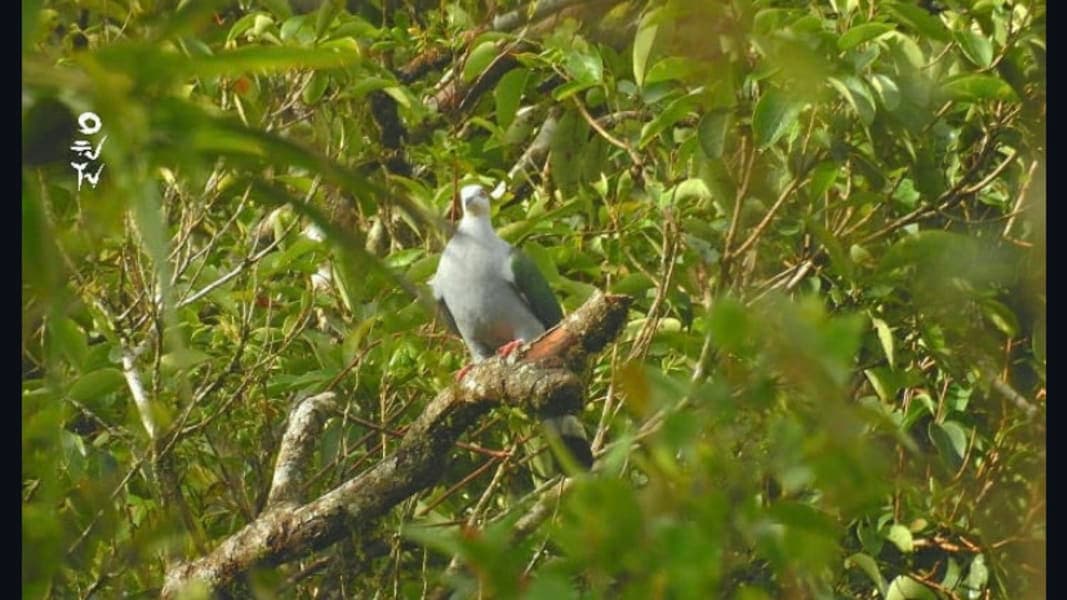
The most recent example of this is the Mindoro Imperial-Pigeon, which we added to the lost birds list in early 2026. Noticing that this species had been identified as a lost bird, Kenneth Manuel, Dariel Naguit and Erwin Torio reviewed some of their personal records and found an unpublished photo of the imperial-pigeon that Erwin took in the mountains of Mindoro in December 2019. Thanks to this image, and the help from Kenneth, Dariel, and Erwin, the imperial-pigeon no longer qualifies as “lost.”
Of course, there’s an important caveat here. While a single photo from seven years ago does mean that the imperial-pigeon does not technically qualify as lost, it is still an extremely seldom-recorded bird and getting more recent photos, sound recordings, and information would be very worthwhile.
Since we started tracking lost birds in 2022, birders around the world have helped us identify four other species that were never actually lost:
Northern Catbird – included in the 2024 lost birds update, records from 2012 and 2020 mean that this species was not lost according to the ten-year definition. Northern Catbird is now treated as a subspecies of Black-eared Catbird in the eBird, BirdLife, and AviList taxonomies.
Jambandu Indigobird – included in the original 2022 version of the lost bird list, there are photos and sound recordings from 2021.
New Britain Thrush – also part of the 2022 list, a photographic record from 2017 as well as more recent photos in 2024 mean that this bird was not a lost species in our time frame.
Carrizal Seedeater – another member of the 2022 list, there are photos from 2009 and 2016 as well as a number of recent records that include excellent photos and sound recordings of the species.
If you have photos, sound recordings, or recent information about poorly-known species please consider sharing them on one of the publicly-accessible databases listed above or getting in touch with us. These media-documented records are valuable for an array of scientific and conservation outputs in addition to lost birds. Likewise, if you know of documented records of a species on the lost bird list please don’t hesitate to get in touch.